DONG-A ILBO

Replacing Multi-Million Dollar Space-Grade Semiconductors with Commercial Off-the-Shelf Products: Why 'Enclosures' Are Booming in the New Space Era
- To maximize cost-efficiency, the aerospace industry is replacing expensive space-grade parts with affordable Commercial Off-The-Shelf (COTS) components that require advanced protection.
- South Korean startup Space&bean developed 'SCUTUM R', custom radiation shielding enclosures validated on the ISS. These protect COTS chips, slashing costs to a fraction while extending their operational lifespan.
- Backed by the government's 2026 'Deep Tech TIPS' program, Space&bean is localizing critical space-grade materials to become a key player in the global New Space supply chain.
On June 12, Elon Musk's SpaceX went public. Immediately following its initial public offering, the market value of SpaceX surged to 2,500 trillion won, ranking seventh globally in total market capitalization as of July. The listing of SpaceX is an event that goes beyond the mere public offering of a tech company; it signals that the 'New Space' era, where the private market drives space development, has officially integrated into institutional finance.
Previously, the Old Space era was led by NASA, the Department of Defense, and giant defense contractors, with objectives centered on national security, technological display, and pure scientific exploration. Although these were tax-funded programs, they often lacked efficiency due to cost-plus contracts, where higher costs led to increased revenue. Furthermore, except for special cases like the Space Shuttle, the launch vehicles themselves were limited to single-use launches. At that time, the transport cost per kilogram for the Space Shuttle was 73 million won, and even the Delta IV exceeded 13 million won in 2017.

An image captured by SpaceX's Ship 38 during its ascent. S38 exploded after its 11th flight, and S40 is scheduled to conduct its 13th flight in July this year. / Source=SpaceX
In contrast, the New Space era is driven by private enterprises such as SpaceX and Blue Origin, with the objective of generating commercial profits based on private capital. Because they must generate profits, they pursue high efficiency with low costs, and they have advanced technologically to make launch vehicles reusable. In particular, the reusability of launch vehicles has drastically driven down the cost of traveling to space. Currently, the transport cost per kilogram for SpaceX's Falcon 9 is around 3.6 million won, while the SpaceX Starship targets a cost in the 60,000 won range.
As SpaceX opened up the space launch vehicle market at prices previously unimaginable, numerous startups worldwide are now challenging this market. Instead of expensive, space-grade components that cost hundreds of millions of won, they have begun utilizing commercial off-the-shelf (COTS) products. Various ideas to secure cost-effectiveness, such as using 3D-printed parts, are becoming a reality. One of the companies at the center of this movement is Space&bean.
SPACE & BEAN Proves Performance and Quality Through Participation in NASA's MISSE
SPACE & BEAN's flagship product is 'SCUTUM R', a space radiation shielding solution. 'SCUTUM R' is an advanced radiation shielding solution specifically designed to increase the utility of commercial off-the-shelf (COTS) products in space missions, replacing expensive space-grade components. Notably, while typical companies focus solely on shielding materials, Space&bean goes beyond material development. The company possesses various customized design technologies for everything from optimal shielding enclosures for a single semiconductor to diverse forms of small satellite systems.
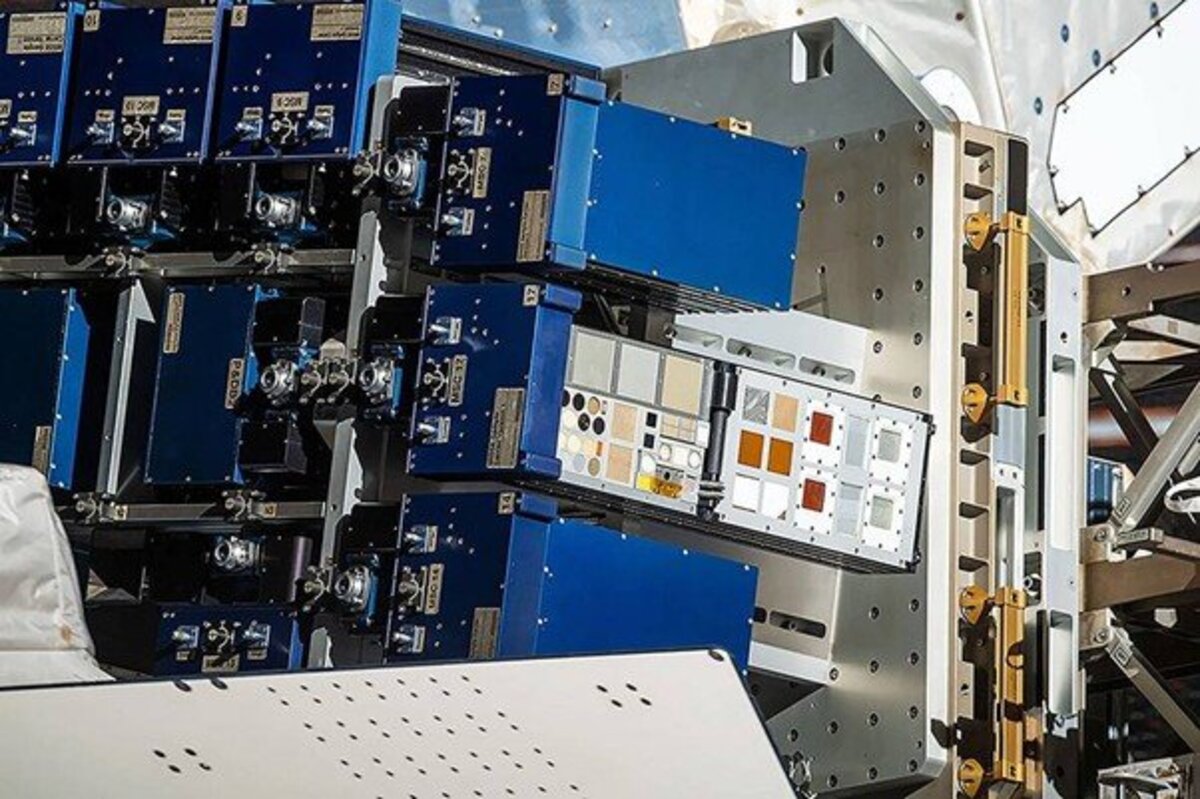
The MISSE environment currently underway on the ISS, a program that acquires data by exposing materials to the outer space environment. / Source=NASA
SPACE & BEAN's products and solutions began rolling out in earnest in the second half of 2023, and starting this year, the company is aggressively targeting the aerospace market in line with the opening of the New Space era. In fact, Space&bean proved its technological prowess last January by participating in NASA's MISSE(Materials International Space Station Experiment) project alongside its U.S. partner, sending 'SCUTUM R' to the International Space Station. The MISSE project is a space validation program that mounts new materials and components onto the external platform of the ISS to verify how well they endure the actual space environment.
The 'SCUTUM R' launched to the ISS by Space&bean is intended to replace the traditional aluminum shielding of spacecraft. It reduces weight by up to 30% while simultaneously resolving space radiation blocking, electromagnetic wave shielding, and thermal dissipation in a vacuum. 'SCUTUM R' successfully passed NASA's ground safety tests. When concerns arose regarding customs delays during NASA's delivery schedule, Kyung-ryeong Min, the CEO of Space&bean, personally carried the product to the United States to deliver it.
Enclosures: A Field Where Customized Design Capability Is More Crucial Than the Material Itself
Why, then, must companies outsource everything up to enclosure design rather than just receiving the materials? The reason lies in the inherent characteristics of space launch vehicles. Simply being supplied with good shielding materials and manufacturing an enclosure using those materials are entirely different domains. The core of New Space is profit generation, and the weight of a space launch vehicle equates directly to money. Wrapping components in unconditionally thick and heavy materials for radiation shielding is not the correct answer. Conversely, if the enclosure is not built to an appropriate standard, the COTS components launched with great effort will fail.
Space&bean directly performs every step, from material and enclosure design to the fabrication of integrated module protection enclosures. Through optimization, they achieve extreme shielding efficiency, an area where a material manufacturer—rather than a component manufacturer—can deliver a higher level of completion.

Space&bean's enclosure construction procedure. / Source=Space&bean
Enclosures do not merely shield against radiation. They must also withstand extreme vibration and thermal shock during launch, as well as outgassing phenomena in a vacuum environment. Furthermore, they must prepare for various physical phenomena (secondary electrons) that can occur inside the material when space radiation collides with the shielding material. In addition, they comprehensively perform wireless charging integration, precision material processing, and radiation analysis.
When designing composite housings, Space&bean utilizes ANSYS EMC PLUS to verify the thickness and joint areas required to block space radiation and high-power electromagnetic waves. During the subsystem design phase, they utilize ANSYS Charge Plus to design the geometric structure of the metal housing and the discharge system to prevent electrical discharge. Furthermore, they provide FRIDAY(FAST RADIATION IMPACT DETECTION AND YIELD), a proprietary design service that optimizes their unique multi-layered shielding technology for each component.
Cases of Reducing Costs to One-Hundredth While Multiplying Performance and Lifespan
Enclosure-related technologies for COTS boast immense high added value on their own. NASA's Shield-1 mission, conducted in 2017, was a significant project that alerted the world to this importance. The Shield-1 mission was carried out with the goal of extending the lifespan of COTS-based CubeSats operating in space radiation environments and polar orbits to several years. NASA's Langley Research Center fabricated an atomic number Z-grade radiation shielding box to protect the CubeSat satellites and deployed a charge dissipation film to mitigate internal charging phenomena and electrostatic discharge occurring in space charging environments.

A CubeSat satellite deployed in the Shield-1 mission conducted by NASA. It aimed to safely utilize COTS components based on atomic number Z-grade radiation shielding performance. / Source=NASA
The Geostationary Transfer Orbit (GTO) where this satellite was deployed is far more severe than Low Earth Orbit (LEO), with 10 times the proton dose and 100 times the electron dose. By utilizing Z-grade shielding materials, NASA secured the same level of shielding capability with only half the thickness of conventional aluminum. In fact, NASA extended the lifespan of the CubeSats, which previously lasted only three months, to several years, thereby lengthening the lifespan of the electronic equipment. Ultimately, this shortened the development period for related technologies and laid the groundwork for the emergence of companies like Cosmic Shielding.
Cosmic Shielding is a radiation shielding material startup founded in 2020 by Yanni Barghouty, a former computer engineering researcher at NASA's Marshall Space Flight Center. During his tenure at NASA, the Shield-1 mission was in full swing, a period focused heavily on direct cost reduction through radiation shielding technology and COTS protection. Currently, Cosmic Shielding has secured a TACFI(Tactical Funding Increase) contract worth approximately $4 million (about 6 billion won) from the U.S. Department of Defense and the U.S. Space Force(AFWERX program) to develop a space radiation shielding performance prediction model. It also maintains close technical cooperation, such as testing shielding materials for Artemis spacesuits alongside NASA's Space Radiation Analysis Group(SRAG).
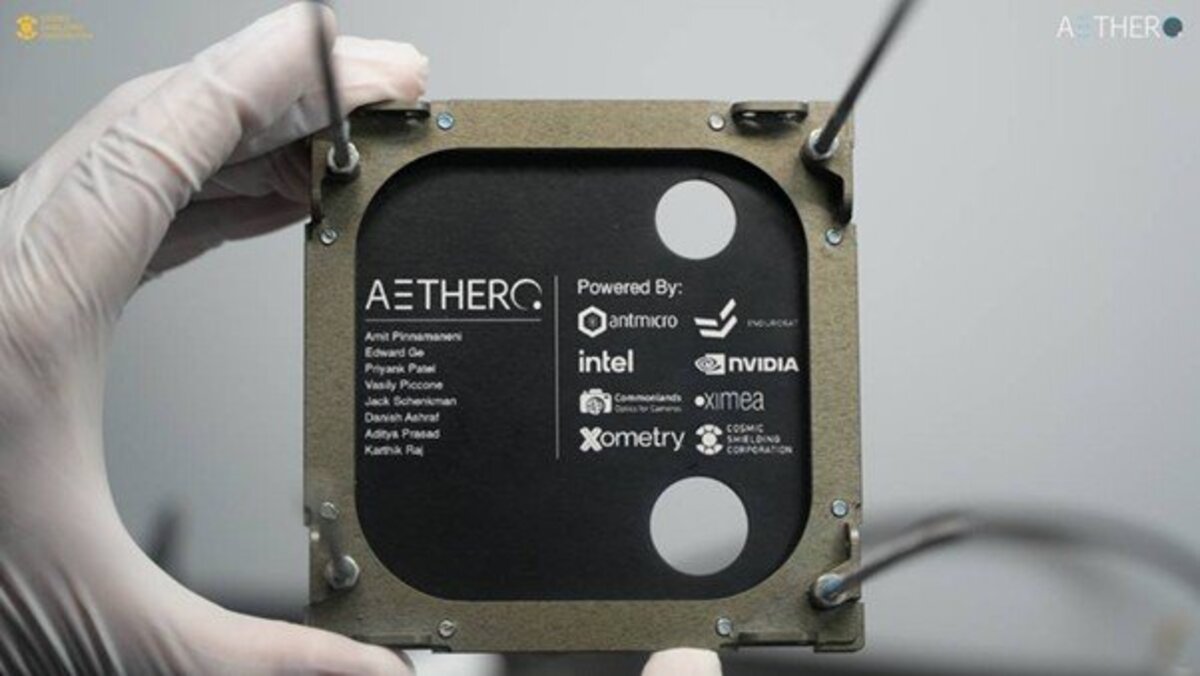
Cosmic Shielding, in cooperation with the U.S. aerospace startup Aethero, has launched the COTS component NVIDIA Jetson Orin NX into space. / Source=Aethero
Cosmic Shielding also uses 'Plasteel', a composite material in which radiation-blocking nanoparticles are dispersed within a polymer matrix, as its core material to shield against secondary radiation and neutrons. In particular, they create a hybrid metal-polymer shielding structure combined with conventional aluminum enclosure structures. They protect COTS by directly applying and fabricating enclosure thickness and structural optimization tailored to mission environments such as LEO, Medium Earth Orbit (MEO), and Geostationary Earth Orbit (GEO). In fact, Cosmic Shielding succeeded in manufacturing and launching custom enclosures into space that house standard commercial semiconductors, such as the NVIDIA Jetson Orin, which are highly heat-generative and sensitive to radiation.
Space-grade semiconductors cost between $100,000 and $200,000 (approximately 150 million to 300 million won) per unit despite their significantly lacking performance. When development periods and certification procedures are factored in, the cost exceeds billions of won. On the other hand, by directly applying the Jetson Orin NX chip, which costs around $1,000 (about 1.5 million won), into an enclosure, they reduced costs to about one-hundredth and compressed years of work into just a few hours, saving massive expenses. According to Cosmic Shielding, applying 'Plasteel' shielding reduced the error rate to one-tenth and increased the operational lifespan of the equipment eightfold.
SPACE &BEAN's COTS Enclosures Likely to Be an Insightful Solution for the New Space Era
Globally, the shielding material market for COTS is recognized for its tremendous potential. This is because it can yield monumental results depending on how it is utilized. In addition to the exemplary Cosmic Shielding, Space Talos of the United Kingdom, Melagen Labs of the United States, and StemRad of Israel are developing radiation shielding material technologies. In the case of Space&bean, they can deliver customized, optimal products for adopting companies based on their dedicated enclosure design capabilities in addition to shielding materials.

Space&bean was selected as a Deep Tech TIPS company in 2026 and will receive up to 1.5 billion won in research and development funding over the next three years. / Source=Space&bean
The Ministry of SMEs and Startups is also supporting Space&bean's growth, having selected it as a 'Deep Tech TIPS' company in 2026. 'Deep Tech TIPS' is the highest tier of the government's tech startup support program, 'TIPS', designed to support companies in the '12 National Strategic Technology Fields' that require high initial investment costs and long R&D cycles. Based on this project, Space&bean is challenging the development and localization of space-grade Thermal Interface Materials (TIM).
Space-grade Thermal Interface Materials are specialized materials that dissipate heat from electronic components while enduring harsh conditions such as vacuum environments, extreme temperature fluctuations, and space radiation. From the government's perspective, localizing TIM, which currently relies heavily on foreign imports, will support the entire space industry. For Space&bean, deploying this material and processing technology into future shielding materials and enclosure fabrication will enhance its competitiveness in the global market.
A successful launch of COTS can bring immense value to a company on its own. By utilizing commercial semiconductors as they are, companies can reap profits hundreds of times higher than with conventional space-grade semiconductors. However, such results can only be achieved by partnering with a company that possesses sufficient technological prowess, long-term cooperative capability, and a deep understanding ranging from shielding materials to optimized enclosures. Furthermore, because South Korea's aerospace industry relies heavily on foreign components, domestic production is urgent, requiring comprehensive support for goods and services starting now.
In this regard, South Korea's SPACE & BEAN is one of the few technology companies that possesses both technological capabilities and an easier path to establishing cooperative frameworks than other shielding material firms. If a partnership based on COTS is required in the New Space era, it is well worth prioritizing.
Source: THE DONG-A ILBO(Enclosures Drive the New Space Era) | Reporter: Si-hyeon Nam