Platum

The Man Putting Receipts on AI – Ashley Reeves, CEO of ARBA Labs

He searched for competitors. There were none. At first, he thought he had been looking in the wrong place. Korea is among the world’s best in hardware, robotics, and industrial AI. Yet when it comes to answering the question, “How can we trust Edge AI?” no company was addressing it head-on. That is where Ashley Reeves, a British entrepreneur, stepped in.
No Receipt
“If an AI model is not secured and auditable, then when something goes wrong, it becomes impossible to determine responsibility.”
Reeves does not see this as a technical flaw. Rather, it is a structural gap he repeatedly observed during his years in the aerospace industry.
Today, AI is rapidly moving toward Edge AI—systems that operate outside network environments, such as drones, factories, vehicles, and satellites. The problem is that once an AI model is deployed on a device, there is virtually no way to verify whether it has been tampered with or on what basis it is making decisions.
Even if a drone inspecting an aircraft report “no anomalies,” no one can guarantee that the judgment actually came from the original model.
ARBA Labs inserts a trust layer into this gap. Their system combines hardware and software to record AI decision-making on edge devices like a fingerprint, generating cryptographic proofs that cannot be tampered with. These proofs can be verified even in offline environments and across different organizations. In essence, it is a receipt for AI.
When a Drone Gets It Wrong
In 2023, a Cruise robot taxi in San Francisco dragged a pedestrian after an AI malfunction, causing injuries and triggering a government investigation.
The following year, in 2024, the European Union passed the AI Act, which mandates that AI used in safety-critical industries such as aerospace must be transparent, verifiable, and auditable. Korea is moving in a similar regulatory direction.
Reeves cites IBM’s 2024 “AI in Action” report, which found that roughly 85% of organizations lag behind in AI adoption maturity. In other words, many organizations cannot clearly explain what their AI systems are actually doing. For Reeves, that statistic is not a crisis, a market.
ARBA Labs has now reached Technology Readiness Level (TRL) 7, meaning the technology has progressed beyond prototype stage to a deployable infrastructure. The company ranked 4th overall at the COMEUP 2025 Demo Day, and its first production deployment is targeted for 2026. Although commercial revenue has not yet begun, momentum is building in terms of technical validation and partnerships.
The Land of Hardware
Why Korea? Reeves answers without hesitation.
“Korea has exactly what we need most: a hardware ecosystem.”
As European space agencies increasingly pursue partnerships in Asia, the key factor in collaboration is ultimately hardware—an area Europe has yet to fully fill. Japan, Taiwan, and Southeast Asia were also considered, but the density of technology and manufacturing infrastructure in Korea stood apart.
His decade-long engagement with Asia centered on Korea reflects that judgment. Another strategic factor is that many Asia-Pacific countries are strongly connected to the United States. Reeves sees an opportunity on the opposite side - connecting with the European Union.
Build in Korea. Validate in Korea. And take it to Europe together with Korean companies. For Reeves, Korea is not simply a market for expansion but a hub where technology is built.
Leaving the Language of Space
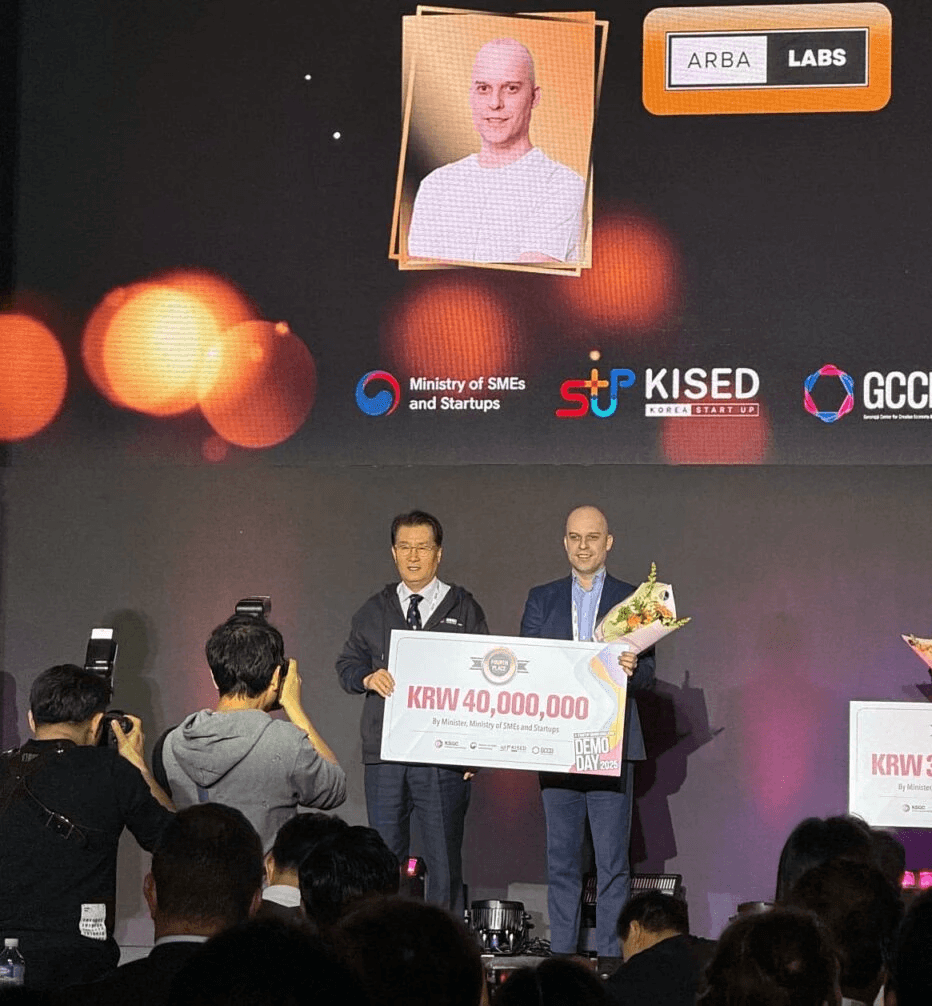
ARBA Labs’ connection to the Korean market was facilitated through the K-Startup Grand Challenge (KSGC). KSGC is a global startup support program operated by Korea’s Ministry of SMEs and Startups, designed to identify promising overseas startups, provide acceleration support in Korea, and help them integrate into the Korean startup ecosystem.
Before joining the program, ARBA Labs explained its technology using the language of the European space industry. But the feedback from KSGC managers and mentors in Korea was different. “This isn’t just space technology. It belongs in factories, robots, drones, and national infrastructure.” That single remark changed the company’s positioning. Reeves began selecting specific chipsets and adapting to local engineering standards. He stopped speaking in the language of researchers and began speaking in the language of production floors.
Korean customers also responded differently than expected. Conversations moved quickly from “That’s interesting technology” to “How exactly does this integrate into our production systems?” The key was not explaining what the technology was but showing precisely where it fits.
An Empty Space
Korean companies already had world-class answers when it came to AI performance and speed. But one question remained unanswered: How do you prove that an AI deployed in the field is still the original model? No one was addressing that question directly. AI integrity was based on assumption, not proof.
This realization changed Reeves’s perspective. “In the past, we asked whether Korea was the right market for us. Now we ask how we can build this technology together with Korea.”
Building Bridges
Since entering Korea, ARBA Labs has begun connecting with organizations already deploying offline Edge AI. All of them share the same challenge - meeting government regulatory requirements.
“The timing is exactly right. The market is just opening, and the demand already exists.”
Partnerships are also taking shape.
Space & Bean, a Korean company developing lightweight radiation-shielding materials, is working with ARBA Labs to protect its modules. Through this collaboration, connections have been established with European satellite operators, and discussions are underway regarding potential mission applications.
In July 2025, Korea became the first Asian country to gain associate membership in Horizon Europe, increasing European interest in Korea’s technology ecosystem.
Build in Korea. Validate in Korea. Go to Europe together with Korean companies. When asked what ARBA Labs hopes to become in five years, Reeves chose a single word. Not a security solution, but a standard - the trust infrastructure that offline Edge AI must follow.
“The moment a Korean company says, ‘ARBA Labs is now part of our operations,’ that will be the real beginning of our journey in Korea.”
──────────────
[Startup’s Story #525] 배포된 AI는 아무도 모른다
AI에 영수증을 붙이는 사람 – 애슐리 리브스 아르바랩스(ARBA Labs) 대표
경쟁자를 찾았다. 없었다. 처음에는 잘못 찾은 줄 알았다. 한국은 하드웨어, 로보틱스, 산업용 AI 분야에서 세계 최고 수준이다. 그런데 ‘엣지 AI를 어떻게 신뢰할 것인가’라는 질문에 정면으로 답하는 기업은 어디에도 없었다. 그 자리에 영국 출신 애슐리 리브스가 있다.
영수증이 없다
“AI 모델이 보안되지 않고 감사(audit) 가능한 상태가 아니라면, 문제가 발생했을 때 책임 소재조차 명확히 할 수 없습니다.” 리브스는 이를 기술 결함으로 보지 않는다. 항공우주 산업에서 오랫동안 몸담으며 반복적으로 목격한 구조적 공백이다.
오늘날 AI는 드론, 공장, 차량, 위성처럼 네트워크 바깥에서 작동하는 ‘엣지 AI(Edge AI)’로 빠르게 이동하고 있다. 문제는 이 AI가 한 번 디바이스에 배포되면, 그 모델이 변조됐는지, 지금 어떤 근거로 결정을 내리는지 확인할 방법이 사실상 없다는 점이다. 항공기 결함을 점검한 드론이 ‘이상 없음’을 기록했다 해도, 그 판단이 정말 원본 모델에서 나온 것인지를 아무도 보장할 수 없다.
아르바랩스(ARBA Labs)는 이 공백에 ‘신뢰 레이어(trust layer)’를 끼운다. 하드웨어와 소프트웨어가 결합된 시스템이 엣지 디바이스에서 AI의 의사결정을 지문(fingerprint)처럼 기록하고, 변조 불가능한 암호학적 증명을 생성한다. 오프라인 환경에서도, 서로 다른 조직 사이에서도 검증할 수 있다. AI의 영수증이다.
드론이 틀렸을 때
2023년 미국 샌프란시스코에서 크루즈(Cruise) 로봇 택시가 보행자를 끌고 간 사고가 발생했다. AI 오작동이 원인이었고, 인명 피해가 발생했으며, 정부 조사가 뒤따랐다. 이듬해인 2024년 유럽연합은 AI 액트(AI Act)를 통과시켰다. 항공우주 등 안전 중요 산업에서 AI는 투명하고, 검증 가능하며, 감사 가능해야 한다고 명시됐다. 한국도 유사한 방향의 제도화가 진행 중이다.
리브스는 IBM의 2024년 ‘AI in Action’ 보고서를 인용하며 전체 조직의 약 85%가 AI 도입 성숙도에서 뒤처진 것으로 분류됐다고 말한다. 자신들이 운영하는 AI가 실제로 무엇을 하는지 명확히 파악하지 못하는 조직이 그만큼 많다는 의미다. 그에게 이 수치는 위기가 아니라 시장이다.
아르바랩스는 현재 기술 성숙도(TRL) 7 단계에 도달해 있다. 프로토타입을 넘어 실제 배포 가능한 인프라 수준이다. 2025년 컴업(COMEUP) 데모데이에서 종합 4위를 기록했고, 첫 번째 프로덕션 배포는 2026년을 목표로 진행 중이다. 상용 매출이 발생하기 전 단계지만, 기술 검증과 파트너십 확보에서는 속도가 붙고 있다.
하드웨어의 나라
왜 한국인가. 그는 이 질문에 망설임이 없었다. “한국에는 제가 가장 필요로 하는 것이 있습니다. 하드웨어 생태계입니다.”
유럽의 우주 기관들이 아시아와의 협력을 본격화하고 있는 지금, 협업의 핵심은 결국 하드웨어다. 유럽이 아직 메우지 못한 바로 그 영역. 일본, 대만, 동남아시아도 고려했지만, 기술과 제조 인프라의 밀도에서 한국은 달랐다. 10년 넘게 한국을 중심으로 아시아 활동을 이어온 것도 이 판단과 무관하지 않다.
아시아 태평양 대부분의 국가들이 미국 축과 강하게 연결돼 있다는 점도 계산에 들어간다. 리브스는 그 반대편, 유럽연합(EU)과의 연결에서 자신만의 자리를 본다. 한국에서 만들고, 한국에서 검증하고, 한국 기업과 함께 유럽으로 가져간다. 한국을 단순한 진출 시장이 아니라 ‘기술을 만드는 중심지’로 선택한 이유다.
우주어를 버렸다
이 과정에서 아르바랩스를 한국 시장과 연결한 것이 K-스타트업 그랜드 챌린지(KSGC)다. KSGC는 해외 유망 창업 기업을 발굴해 국내 액셀러레이팅을 지원하고 국내 창업생태계에 정착을 돕는 중소벤처기업부의 글로벌 창업 지원 프로그램이다.
프로그램 참여 전, 아르바랩스는 유럽 우주 산업의 언어로 기술을 설명하고 있었다. 그런데 한국에서 KSGC 매니저와 멘토들이 건넨 말은 달랐다. “이건 단순한 우주 기술이 아니다. 공장, 로봇, 드론, 국가 인프라에 들어가야 할 기술이다.” 그 한마디가 포지셔닝을 바꿨다. 리브스는 특정 칩셋을 직접 선택하고 로컬 엔지니어링 표준에 맞추기 시작했다. 연구자의 언어가 아니라 생산 현장의 언어로 이야기하기 시작했다.
한국 고객들의 반응도 예상과 달랐다. “흥미로운 기술이네요”에서 “이게 실제 생산 시스템 안에 어떻게 들어가나요?”로 매우 빠르게 넘어갔다. 기술이 무엇인지가 아니라, 어디에 정확히 위치하는지를 보여줘야 했다.
아무도 없는 자리
한국 기업들은 AI의 성능과 속도에 이미 세계 수준의 답을 갖고 있었다. 그런데 한 가지 질문은 공백으로 남아 있었다. ‘현장에 배포된 이 AI가 원본 그대로인지를 어떻게 증명하는가.’ 그 질문을 정면으로 다루는 곳은 없었다. AI의 무결성(integrity)은 ‘증명’이 아니라 ‘가정’에 기반하고 있었다.
이 경험이 리브스의 생각을 바꿨다. “예전에는 ‘한국이 우리에게 맞는 시장일까?’를 고민했다면, 지금은 ‘이 기술을 한국과 함께 어떻게 만들어갈 것인가?’를 묻고 있습니다.”
다리를 만든다
한국에 들어온 이후 이미 오프라인 엣지 AI를 배포하고 있는 여러 조직들과 접촉을 시작했다. 이들은 모두 정부 규제 충족이라는 같은 과제를 안고 있다. “지금이 정확히 맞는 타이밍입니다. 시장은 막 열리고 있고, 실제 수요는 이미 존재합니다.”
파트너십도 구체화됐다. 스페이스앤빈(Space & Bean)은 아르바랩스 모듈을 보호하는 경량 방사선 차폐 소재를 개발하는 한국 기업이다. 이 협력을 기반으로 유럽 위성 운영사와의 연결이 이루어졌고, 실제 미션 적용 가능성까지 논의가 진행 중이다. 2025년 7월 한국이 아시아 최초로 Horizon Europe 준회원국이 되면서, 유럽에서도 한국 기술 생태계를 향한 관심이 높아지고 있다.
한국에서 만들고(build), 한국에서 검증하고(validate), 한국 기업과 함께 유럽으로 나간다. 5년 뒤 아르바랩스의 모습을 묻자, 그는 단어 하나를 골랐다. 보안 솔루션이 아니라 표준(standard). 오프라인 엣지 AI가 기본적으로 따라야 하는 신뢰 인프라.
“한국 기업이 ‘이제 ARBA Labs는 우리 운영의 일부다’라고 말해주는 순간, 비로소 저희의 한국 여정이 진짜 시작됩니다.”
Platum 김문선 기자